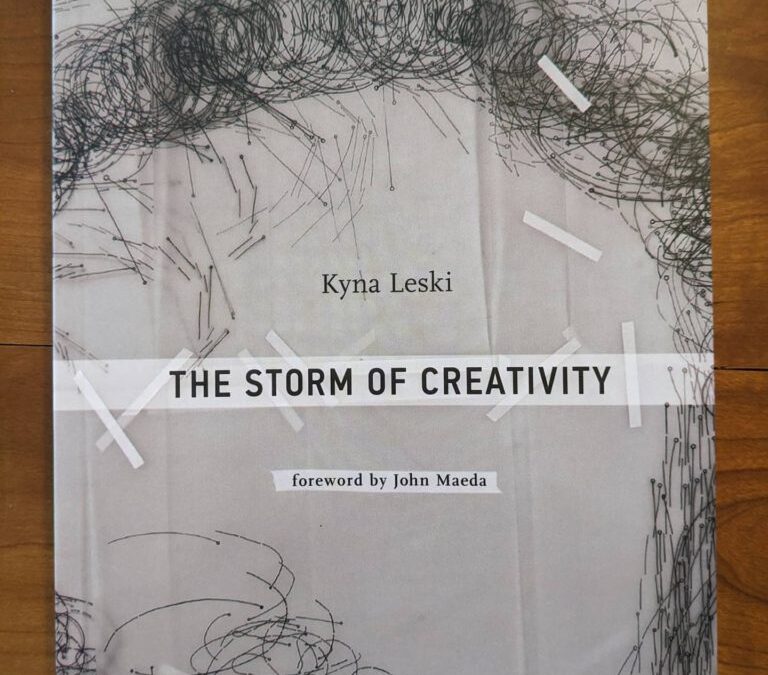
The Storm of Creativity The Storm of Creativity is now in paperback. From the additional preface for this new edition:
“I have returned to the power of three active, in-the-moment, decision-making faculties:
- Improvisation (chapter 5): on-the-spot choices made through propelling recognition and generation of pattern and language
- Sensibility (chapter 6): live sensory feedback of perceiving and conceiving
- Imagination (chapter 7): the glimpse of an alternative to the here and now affording movement to move ahead.
These faculties are generally associated with the arts. Improvisation is a term and practice known to actors, comics, and musicians. And it is at play over a longer period, without a live audience, with the choices made by all artists and designers. But improvisation is necessary in any situation without a plan, script, or map, and when you find yourself in the unfamiliar. Improvisation is needed in crisis when on-the-spot and in-the-moment decisions are made and actions taken.
Creative people such as artists, clothing designers, and chefs are celebrated for their sensibility. But sensibility informs the surgeon as to how much pressure to apply to the scalpel. Similarly, the community organizer “reads” the room in regulating and directing pressure of purpose.
Imagination is associated with children, illustrators, and storytellers. But as leaders of the civil rights movement knew, it also fuels the courage to escape oppression by offering a counterweight to an existing reality.
Even though these faculties are vital, necessary, and practiced in addressing the most pressing problems, they are ignored by academic institutions. An increasingly data-driven culture occludes the immeasurable. Sensibility, improvisation, and imagination aren’t valued in the writing of prescriptive syllabi—the guidelines of curriculum committees and myopic strategic plans—yet they are indispensable for uncertainty and crisis.”